Neck Pain From Desk Work in Chelmsford: “Tech Neck” Symptoms (What Helps and What to Avoid)
If you spend a lot of your day at a desk, it's very common to develop neck pain that creeps in gradually — a stiff neck when you turn your head, a tight upper trapezius/shoulder, or headaches that feel like they start at the base of the skull.
People often blame “bad posture,” but the more useful way to think about it is:
your neck and upper back are being asked to hold one position for a long time
your muscles fatigue
joints get stiff
tissues become more sensitive
and then normal daily movements start to feel sore
The good news: desk-related neck pain usually responds very well to a combination of:
movement breaks
targeted strengthening
better workstation setup (simple tweaks, not perfection)
hands-on physio where appropriate
and a plan that fits your real working day
If you're searching for neck pain from desk work in Chelmsford (or nearby areas like Great Baddow, Springfield, Writtle, Galleywood, Boreham or Chelmer Village), this guide will help you:
understand why desk work triggers neck pain
know what to do in the first 7 days
avoid the common mistakes
know when to get assessed
understand what physio treatment typically involves

What does desk-related neck pain usually feel like?
Common symptoms include:
stiffness turning your head (especially after sitting)
aching at the base of the skull
tightness in the upper trapezius (top of shoulder)
pain between shoulder blades
headaches that feel linked to neck tension
pain that's worse at the end of the workday
a “crunchy” feeling when moving (often not serious)
Some people also feel symptoms into the arm — which can happen, but needs proper screening.
Why desk work causes neck pain (without it being “damage”)
Desk work tends to combine:
sustained head/neck position
reduced upper back movement
repetitive small movements (mouse/keyboard)
stress and shallow breathing patterns
fewer movement “inputs” across the day
Even if your posture looks “fine,” holding any position for hours can irritate the system.
A useful phrase is: Your best posture is your next posture.
Meaning: changing position regularly is often more important than finding a perfect posture.
The most common drivers behind “tech neck”
1) Muscle endurance fatigue
Your neck muscles (and upper back) are doing low-level work for long periods. Over time they fatigue and become sore.
2) Joint stiffness (neck + upper back)
When you don't move much, joints stiffen. Then when you finally move (turning to reverse the car, checking blind spots), it feels tight or painful.
3) Sensitivity + stress load
Stress can increase muscle tone and pain sensitivity, especially around the neck/shoulders.
4) Screen/desk setup that increases load
Small changes can make a big difference:
screen too low → more neck flexion
laptop-only setup → encourages “head forward”
chair/desk height mismatch → shoulder tension
mouse too far away → reaching and upper trap overuse
What to do in the first 7 days (practical steps)
If your neck is currently flared, the goal is to calm it down and stop the cycle.
1) Use “micro-breaks” (the biggest win for desk neck pain)
Try:
30–60 seconds every 30–45 minutes
stand up, roll shoulders, gently turn head side to side
take 5–10 slow breaths and relax shoulders down
This is more effective than one long stretch at the end of the day.
2) Don't aggressively stretch into sharp pain
Gentle mobility is good. Forcing end-range stretches can flare an irritable neck.
3) Adjust your workstation (simple, realistic tweaks)
You don't need a perfect ergonomic setup — just reduce the worst offenders.
Quick wins:
raise screen height (books/stand) so you're not looking down all day
bring keyboard/mouse closer so elbows stay nearer your sides
use a separate keyboard/mouse if you're on a laptop
support forearms lightly on desk/armrests if it reduces shoulder tension
4) Heat or gentle movement for symptom relief
Many people find:
heat helps relax muscle tone
gentle movement reduces stiffness
short walks help reset posture and breathing
5) Start light strengthening early (key)
Desk neck pain often improves faster when you build endurance in:
deep neck flexors
upper back/scapular muscles
What to avoid (common mistakes)
trying to “sit up straight” all day (it's exhausting and not sustainable)
one huge stretch session after 8 hours of sitting, then repeating the same pattern tomorrow
cracking your neck constantly for relief (can become a habit without solving the driver)
ignoring headaches that are clearly linked to neck stiffness
pushing through arm symptoms without assessment
When to book a physio assessment
Book in if:
pain lasts more than 2–3 weeks
headaches are frequent and linked to neck tension
pain is affecting sleep
symptoms travel into the arm (tingling/numbness/weakness)
you've had recurrent flare-ups for months
you want a plan that fits your workday and gym/sport routine
Same-day “red flag” note
Seek urgent medical advice if you have:
severe headache unlike your usual, with neurological symptoms
sudden significant weakness/numbness in arm/hand
fever/unwell with severe neck stiffness
symptoms after significant trauma (fall/accident)
What a physio assessment for desk-related neck pain should include
A thorough assessment typically checks:
neck range of motion and symptom behaviour
upper back mobility (often overlooked)
shoulder blade control and endurance
muscle tone/tenderness patterns
nerve screening if symptoms go into the arm
your work setup and daily routine
stress/sleep factors (as contributors)
a clear rehab plan with progressions

How physio treatment usually helps (the roadmap)
Phase 1: Reduce pain + restore comfortable movement
calm flare-ups
improve mobility (neck + upper back)
reduce muscle guarding
set micro-break routine
Phase 2: Build endurance (so it stops coming back)
deep neck flexor endurance
scapular/upper back endurance
breathing and ribcage movement (if relevant)
Phase 3: Return to full activity (gym, running, life)
build tolerance to longer desk days
progress strength work
plan for travel/long drives (common flare trigger)
Simple exercises that often help (general guidance)
These are common starting points. The best options depend on your assessment and irritability.
1) Chin tuck (deep neck flexor activation)
Goal:
gentle “double chin” motion
keep it subtle (not forced)
avoid pain spikes
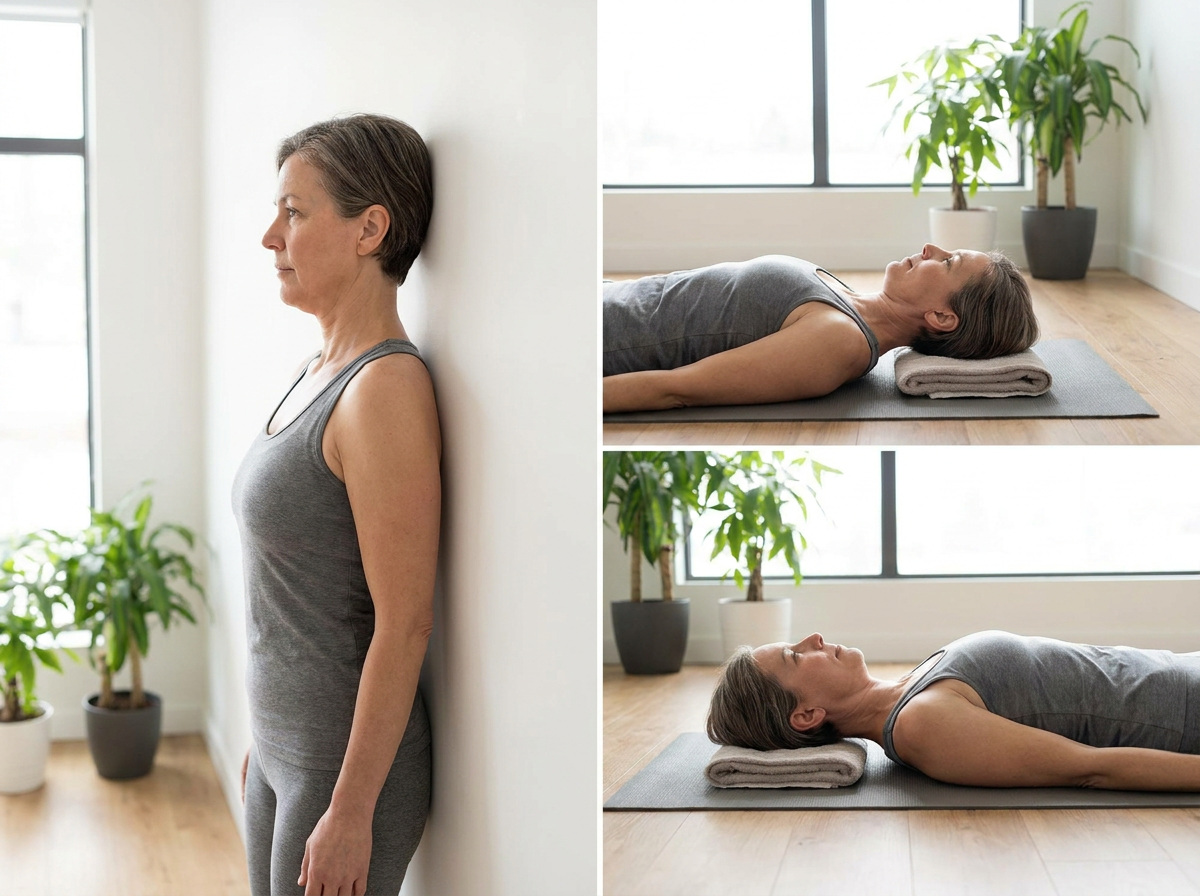
2) Upper back extension / mobility
If your upper back is stiff, your neck often compensates.
3) Scapular retraction endurance
Think: “shoulder blades gently back and down” without shrugging.
4) Movement snacks throughout the day
The exercise you do consistently (little and often) usually beats the perfect exercise you do once a week.
What we can/can't do (honest expectations)
What we can do
identify whether your symptoms are muscular/joint-related vs nerve involvement
reduce pain and headaches linked to neck tension
improve mobility and build endurance for desk work
give you a realistic plan you can actually follow at work
help prevent recurring flare-ups
What we can't do
promise you'll never feel stiff again if you sit for 8–10 hours without breaks
“fix posture” permanently (we aim for resilience, not perfection)
Book a free assessment in Chelmsford
If you're in Chelmsford, Great Baddow, Springfield, Writtle, Galleywood, Boreham or Chelmer Village and want a clear plan for neck pain from desk work, book a free assessment.
Revive Health Chelmsford
Call: 01245 956391 or 07723 503277
Website: https://www.revivehealthchelmsford.co.uk
FAQs: Neck pain from desk work
Is it just bad posture?
Usually it's more about time in one position and muscle endurance than posture being “wrong.”
Should I get a new chair?
Sometimes it helps, but micro-breaks, screen height, and strengthening often make a bigger difference than an expensive chair.
Can desk neck pain cause headaches?
Yes — neck stiffness and muscle tension can contribute to headaches in many people.
What if I get tingling in my hand?
That may suggest nerve involvement and is worth a proper assessment.
How long does it take to improve?
Many people improve over weeks with consistent movement breaks and progressive strengthening.
Disclaimer: This article is for general information only and isn't a substitute for medical advice. If you're worried about your symptoms, please seek appropriate medical care.