Jaw Pain (TMJ) Treatment in Chelmsford: Clicking, Clenching and Pain Near the Ear (What Helps and What to Avoid)
Jaw pain can be surprisingly disruptive. It can affect eating, talking, yawning, sleep, and even concentration — and it often comes with other symptoms like headaches, neck tightness, or a clicking jaw.
A lot of people worry that clicking means the jaw is “out of place.” In reality, many TMJ (temporomandibular joint) problems are related to a combination of:
muscle tension and overload (often from clenching/grinding)
joint sensitivity
stress and sleep factors
neck posture and upper back stiffness
and sometimes dental factors (bite, recent dental work, gum chewing habits)
The good news: most jaw/TMJ issues improve with the right mix of education, habit changes, gentle exercises, and targeted treatment.
If you're searching for jaw pain / TMJ treatment in Chelmsford (or nearby areas like Great Baddow, Springfield, Writtle, Galleywood, Boreham or Chelmer Village), this guide will help you:
understand common causes of jaw pain and clicking
know what to do in the first 7 days
avoid the mistakes that keep it lingering
understand what physio treatment typically involves
know when to get assessed sooner

Step 1: Where exactly is the jaw pain?
Location and triggers help narrow down what's driving it.
A) Pain just in front of the ear
Often linked with:
TMJ joint sensitivity/irritation
disc-related clicking patterns (not always serious)
B) Pain in the cheek/temple muscles
Often linked with:
masseter/temporalis muscle overload
clenching or grinding (daytime or night-time)
C) Pain in the teeth or “sinus” feeling
Can sometimes be:
referred pain from jaw muscles
dental sensitivity (needs dental screening if unsure)
D) Jaw pain plus neck pain/headaches
Very common combination — the jaw and neck often influence each other.
Common TMJ symptoms (what people notice)
pain near the ear when chewing
clicking or popping when opening/closing
jaw feels tight or “stuck”
headaches (often temples)
face/cheek muscle soreness
difficulty opening wide (yawning, biting into a big sandwich)
symptoms worse during stress
symptoms worse after lots of talking or gum chewing
sometimes ringing in the ears (can have multiple causes)
What causes TMJ pain and clicking?
TMJ problems are usually multifactorial — meaning more than one factor contributes.
1) Clenching and grinding (bruxism)
This is one of the biggest drivers. Many people clench without realising — especially when concentrating or stressed.
Clues:
jaw feels tired/sore in the morning
headaches on waking
tooth wear (dentist may mention it)
you catch yourself with teeth pressed together during the day
2) Muscle overload (chewing, gum, hard foods)
Jaw muscles can be overloaded by:
chewing gum
lots of chewy foods (bagels, jerky)
nail biting
jaw “testing” (opening wide repeatedly)
3) Joint sensitivity / irritation
The TMJ joint can become sensitive, especially after:
a big yawn
biting something hard
dental work where the mouth is open for a long time
trauma to the jaw (less common)
4) Neck and upper back factors
Forward head posture and upper back stiffness can increase jaw muscle tone and sensitivity. This doesn't mean posture is “bad” — it means the system may need more movement variety and endurance.
5) Stress and sleep
Stress increases muscle tone and clenching risk. Poor sleep reduces recovery and increases pain sensitivity.
Is jaw clicking serious?
Often, jaw clicking is not dangerous.
Many people have clicking with no pain. Clicking becomes more relevant when it's paired with:
pain
locking (can't open/close properly)
progressive reduction in opening range
worsening function
If you have locking or significant restriction, it's worth being assessed.
What to do in the first 7 days (practical steps)
If your jaw is flared, the goal is to calm it down and reduce overload.
1) Adopt the “jaw rest position” (biggest win)
A simple cue:
tongue gently on the roof of the mouth
lips together
teeth slightly apart
shoulders relaxed
This reduces clenching load. Most people are shocked how often they're clenching during the day.
2) Temporarily reduce hard/chewy foods
For 7–10 days, reduce:
gum
chewy sweets
tough meat
big sandwiches that require wide opening
Think “soft-ish diet” temporarily, not forever.
3) Avoid repeated wide opening “tests”
If yawning hurts, support the jaw gently with your hand and keep it controlled.
4) Heat can help muscle-driven jaw pain
A warm compress over cheek/temple muscles can reduce tone and pain.
5) Gentle jaw movement (not forcing)
Gentle controlled opening/closing within comfort is usually better than stretching hard.
What to avoid (common mistakes)
chewing gum to “loosen it up”
forcing the jaw open wide repeatedly
clenching through stress without noticing
aggressive self-massage that bruises the area
ignoring neck stiffness if it's clearly linked
When to book a physio assessment (and when to see a dentist/GP)
Book in if:
pain lasts more than 2–3 weeks
headaches are frequent and linked to jaw tension
you have jaw locking or significant restriction
symptoms are worsening
you suspect clenching/grinding and want a plan
jaw pain is linked with neck pain and desk work
Consider dental/GP input if:
you suspect tooth infection, severe tooth pain, swelling
you need a night guard for grinding (dentist)
you have ear symptoms that need medical screening
Same-day “red flag” note
Seek urgent medical advice if you have:
facial swelling, fever, feeling unwell (infection concern)
sudden jaw dislocation (can't close mouth)
neurological symptoms (facial droop, severe sudden headache, etc.)
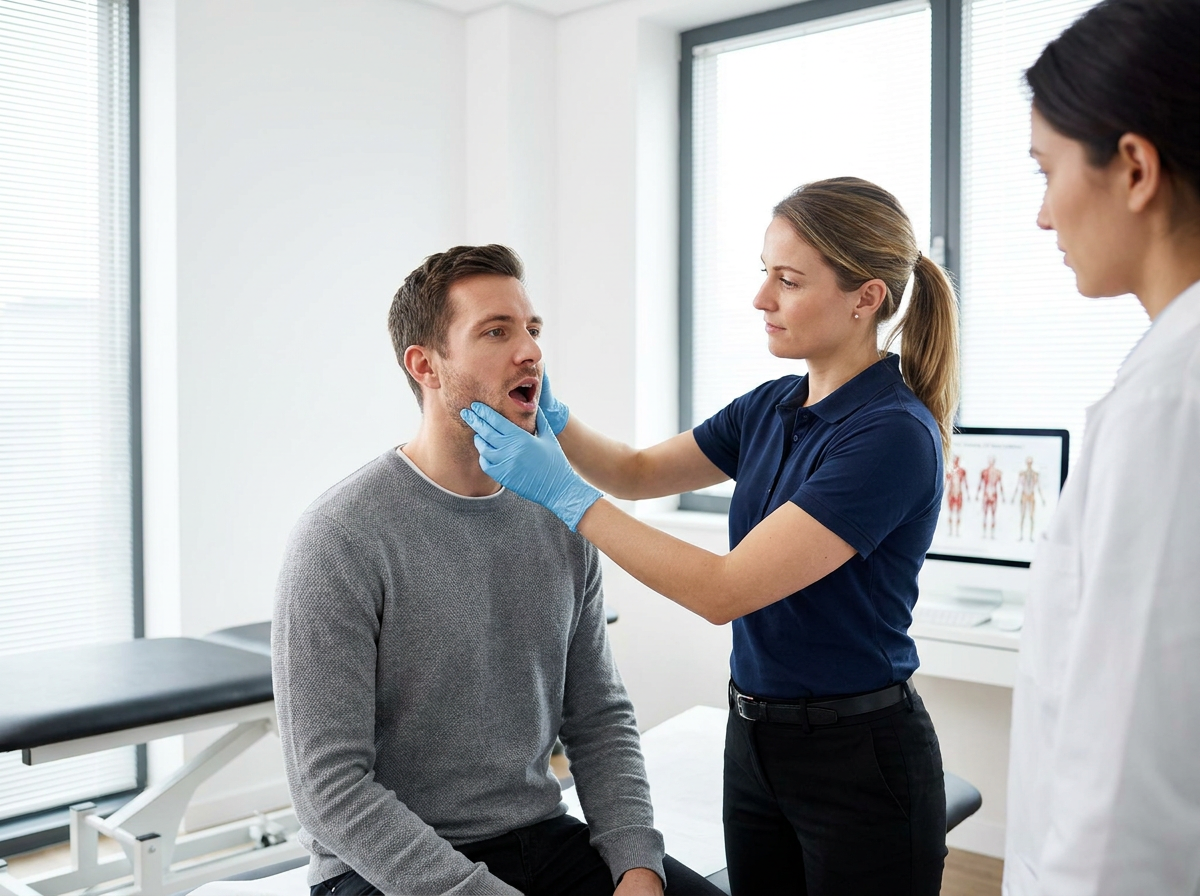
What a physio assessment for TMJ pain should include
A thorough assessment typically checks:
jaw opening range and quality (deviation, clicking)
TMJ joint sensitivity
jaw muscle tenderness (masseter, temporalis)
clenching habits and triggers
neck mobility and posture endurance (as contributors)
headache patterns
a clear plan with progressions and habit strategies
How physio treatment usually helps (the roadmap)
Phase 1: Reduce pain + calm the system
education on jaw rest position and clenching awareness
reduce overload triggers (gum, hard foods, wide opening)
gentle mobility and relaxation strategies
address neck/upper back stiffness if contributing
Phase 2: Restore normal movement and load tolerance
controlled jaw opening/closing exercises
coordination work (reduce “deviation” on opening)
gradual return to normal chewing load
Phase 3: Prevent recurrence
stress-load strategies (micro-breaks, breathing, awareness)
desk setup and neck endurance work
sleep strategies and (if needed) dental night guard support
Simple TMJ exercises that often help (general guidance)
Exact exercises depend on your assessment, but common categories include:
1) Jaw relaxation / rest position practice
This is foundational and often the fastest win.
2) Controlled jaw opening (quality over quantity)
open slowly in a straight line
stop before pain spikes
focus on smooth motion
3) Neck and upper back mobility “snacks”
Because jaw and neck often share the same stress/posture drivers.
If you want, tell me whether your main issue is clicking, pain, or locking, and I'll tailor the FAQ section and “what helps most” priorities.
What we can/can't do (honest expectations)
What we can do
identify whether symptoms are mainly muscle-driven, joint-driven, or habit-driven
reduce pain and headaches linked to clenching
improve jaw opening comfort and chewing tolerance
address neck/upper back contributors
give you a realistic plan that fits your workday and stress levels
What we can't do
promise clicking will always disappear (many people have harmless clicking)
fix night grinding without addressing stress/sleep and (sometimes) dental support
Book a free assessment in Chelmsford
If you're in Chelmsford, Great Baddow, Springfield, Writtle, Galleywood, Boreham or Chelmer Village and want a clear plan for jaw pain/TMJ symptoms (including headaches and clenching), book a free assessment.
Revive Health Chelmsford
Call: 01245 956391 or 07723 503277
Website: https://www.revivehealthchelmsford.co.uk
FAQs: Jaw pain / TMJ dysfunction
Why does my jaw hurt more when I'm stressed?
Stress increases muscle tone and clenching. Many people clench without noticing, especially when concentrating.
Is jaw clicking bad?
Often no — especially if there's no pain or locking. Clicking matters more if it's painful, worsening, or associated with restriction.
Should I stop chewing gum?
Yes, temporarily — gum is a common overload trigger for TMJ symptoms.
Can physio help TMJ?
Often yes, especially when symptoms are muscle-driven and linked with neck tension, headaches, and clenching habits.
Do I need a night guard?
If you grind your teeth at night, a dentist may recommend a guard. Physio can still help with muscle/joint sensitivity and habit strategies.
Disclaimer: This article is for general information only and isn't a substitute for medical advice. If you're worried about your symptoms, please seek appropriate medical care.