Ankle Sprain Physio in Chelmsford: What to Do After a Rolled Ankle (and How to Recover Properly)
A rolled ankle can happen in a split second — stepping off a kerb, slipping on wet ground, landing awkwardly in sport, or simply turning too quickly. The frustrating part is that many ankle sprains seem to settle quickly… but then months later you're still feeling weakness, wobbliness, or repeated “little rolls”.
If you're searching for ankle sprain physio in Chelmsford (or nearby areas like Great Baddow, Springfield, Writtle, Galleywood, Boreham or Chelmer Village), this guide will walk you through:
what to do in the first 24–48 hours
how to tell if it's likely a ligament sprain vs something more serious
the rehab steps that reduce the risk of chronic ankle instability
when physiotherapy is worth booking (spoiler: often earlier than people think)
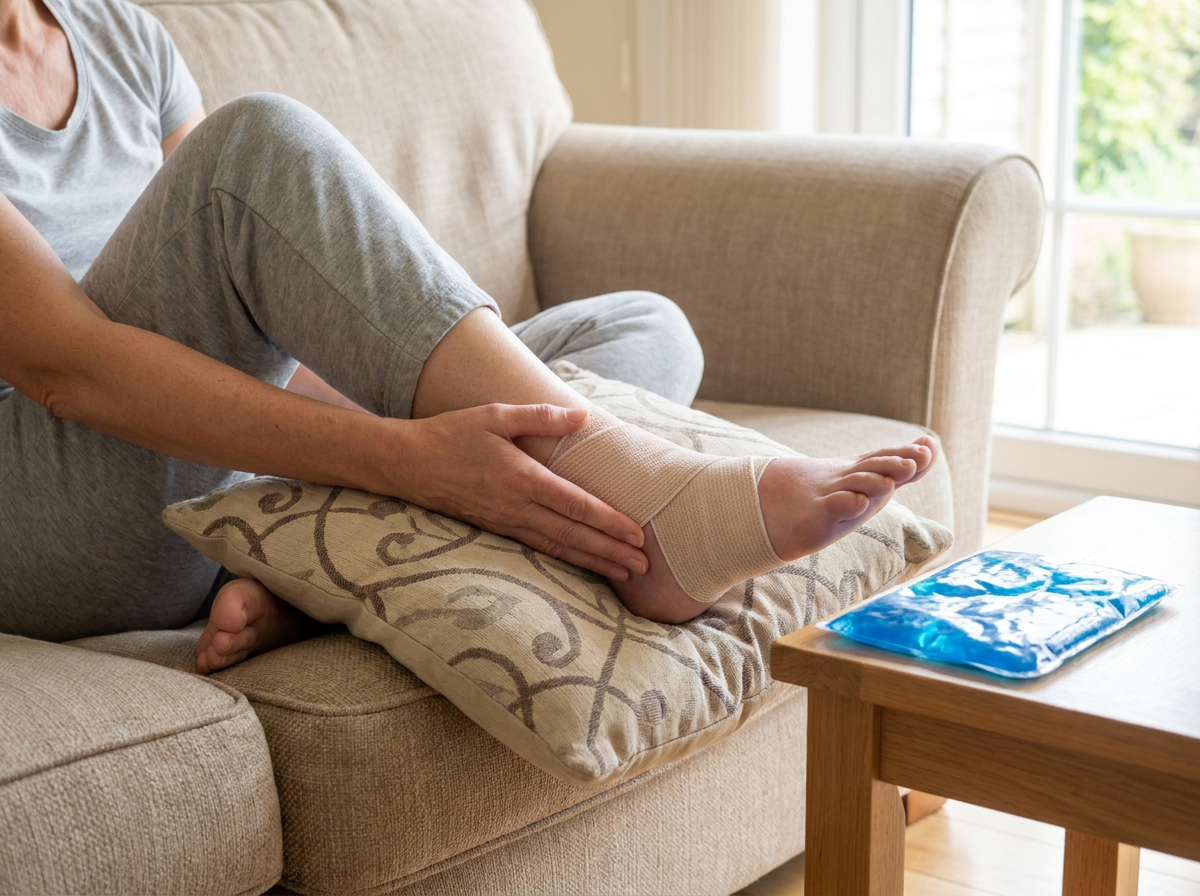 What is an ankle sprain?
Most ankle sprains are lateral ankle sprains — meaning the foot rolls inwards (inversion) and the ligaments on the outside of the ankle are stretched or torn.
The most commonly involved ligament is the ATFL (anterior talofibular ligament), and sometimes the CFL (calcaneofibular ligament) as well.
An ankle sprain can range from:
mild (Grade 1): ligament stretched, minimal tearing
moderate (Grade 2): partial tear, more swelling/bruising, pain with walking
severe (Grade 3): complete tear, significant swelling/bruising, instability, difficulty weight-bearing
The good news: many ankle sprains recover well.
The catch: they recover best when rehab is done properly — not just “rest until it feels okay”.
Common ankle sprain symptoms
You may notice:
pain on the outside of the ankle (often around the bony bump)
swelling (sometimes immediate)
bruising (often appears later)
pain when walking, especially on uneven ground
reduced range of motion
a feeling of instability or “giving way”
The classic story
A lot of people say: “I rolled it, it swelled up, I rested a bit, then it felt mostly fine… but it's never been the same since.”
That “never been the same” feeling is often due to:
incomplete strength recovery
reduced balance/proprioception
stiffness in the ankle joint
returning to sport too quickly
fear/guarding patterns that change how you move
First 24–48 hours: what to do (simple, practical steps)
The aim early on is to control swelling, protect the ankle, and keep safe movement going.
1) Protect it (but don't freeze it completely)
If walking is very painful, use a supportive brace or a compression wrap.
If you're limping heavily, crutches for a short period can help.
Avoid forcing through sharp pain.
2) Elevate and compress
Elevate the ankle when you can.
Compression (tubigrip/ankle support) can help manage swelling.
3) Ice: optional, symptom-based
Ice can reduce pain for some people. It's not mandatory, but it can be useful if it helps you move more comfortably.
4) Gentle movement within tolerance
If it's safe, start gentle ankle movements (up/down, circles) to prevent stiffness — but don't push into sharp pain.
5) Avoid “testing it” repeatedly
Constantly checking if it's better by hopping, twisting, or doing sudden movements can keep it irritated.
When an ankle sprain might be more serious (and needs urgent assessment)
Most sprains are straightforward, but seek urgent medical advice if you have:
inability to take 4 steps (even limping) after the injury
severe pain over the bones (not just soft tissue)
obvious deformity
numbness/tingling that doesn't settle
rapidly worsening swelling, redness, heat, fever
pain high up the ankle with rotation (possible syndesmosis/high ankle sprain)
Ottawa Ankle Rules (quick guide)
Clinicians often use these to decide if an X-ray is needed. If there's bone tenderness in specific areas or you can't weight-bear, imaging may be appropriate.
If you're unsure, it's better to get checked early.
Why ankle sprains keep coming back (chronic ankle instability)
A big reason people re-sprain is that the ankle needs more than “time”.
After a sprain, you can lose:
strength (especially in the peroneals on the outside of the lower leg)
balance and proprioception (your brain's sense of where the ankle is in space)
mobility (especially dorsiflexion — the ability to move the knee over the toes)
confidence in the ankle
If you return to uneven ground or sport without rebuilding these, the ankle is more likely to roll again.
What physio for an ankle sprain should include
A proper assessment isn't just “it's a sprain, rest it”.
A good ankle sprain physio assessment typically checks:
which ligaments/tissues are likely involved
swelling and bruising pattern
range of motion (especially dorsiflexion)
strength (calf, peroneals, foot muscles)
balance/proprioception
walking pattern (are you avoiding pushing off?)
ability to hop, change direction, and tolerate load (when appropriate)
whether it looks like a high ankle sprain or fracture risk

Rehab timeline: what “good progress” often looks like
Everyone's recovery differs, but here's a realistic roadmap.
Phase 1 (Days 1–7): settle swelling + restore basic movement
Goals:
reduce swelling and pain
walk with minimal limp
regain gentle range of motion
Typical focus:
compression/elevation
gentle mobility
light strengthening within tolerance
short walks on flat ground (if tolerated)
Phase 2 (Weeks 1–3): rebuild strength + control
Goals:
normal walking
improved ankle mobility
stronger ankle stabilisers
Typical focus:
calf raises (progressed)
banded ankle strengthening
balance drills (starting easy)
gradual increase in daily steps
Phase 3 (Weeks 3–6+): return to running/sport (if relevant)
Goals:
tolerate impact
change direction confidently
reduce re-sprain risk
Typical focus:
hopping progressions
agility drills
sport-specific movement
return-to-run plan
Important: some people need longer — especially if it was a more severe sprain, you returned too early, or you've had repeated sprains.
The 3 “must-haves” in ankle sprain rehab (that people skip)
1) Dorsiflexion mobility (knee-over-toe ability)
If the ankle stays stiff, you may:
turn the foot out when you walk
overload the knee/hip
struggle with stairs/squats
feel unstable on uneven ground
2) Peroneal strength (outside lower leg)
These muscles help resist rolling inwards. Weakness here is a common re-sprain factor.
3) Balance/proprioception training
This is the “secret sauce” for stability. It trains your nervous system to react quickly when the ground is uneven.
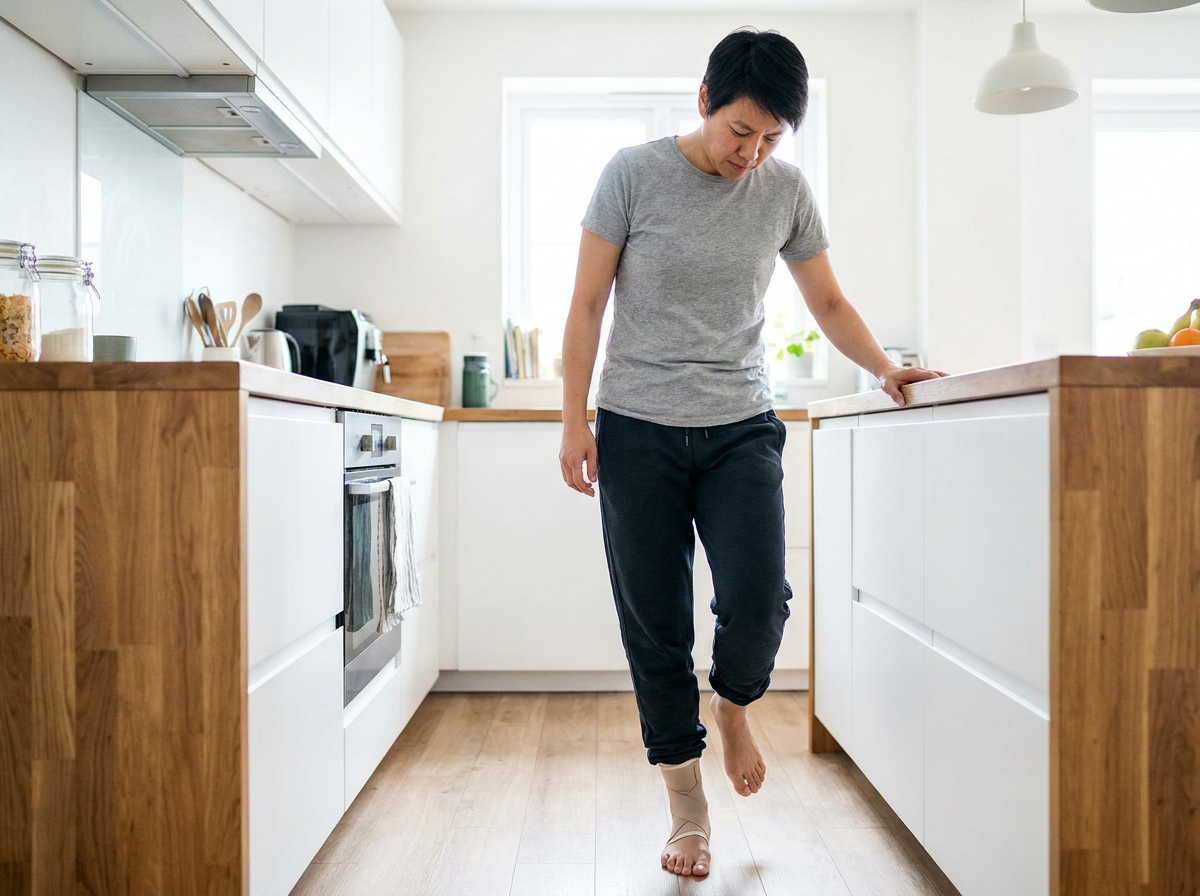
Bracing and taping: should you use it?
Short-term support can be helpful, especially if:
you need to walk more for work
swelling is significant
you're returning to sport
But the long-term goal is not to live in a brace — it's to rebuild capacity so the ankle is stable without it.
A common approach:
brace early for protection
gradually reduce reliance as strength and balance improve
When can you return to running or sport?
A time-based approach alone (“it's been 2 weeks so I'm fine”) isn't ideal.
Better markers include:
you can walk briskly without pain/limp
swelling is minimal and stable
you have near-normal ankle range of motion
you can do single-leg calf raises comfortably (and repeatedly)
you can balance well on one leg
you can hop and change direction without pain or fear (when appropriate)
If you play football, netball, tennis, or do HIIT classes, return-to-sport planning matters because cutting and landing are high-risk moments.
What we can/can't do (honest expectations)
What we can do
assess severity and rule out red flags
reduce pain and swelling with a clear plan
restore mobility and strength
rebuild balance and confidence
guide a safe return to sport/work
reduce the risk of chronic ankle instability and repeat sprains
What we can't do
guarantee a specific number of days to recover (it depends on severity and your demands)
make it “bulletproof” without you doing the rehab work
safely clear you for sport without checking function (especially if you've had repeat sprains)
Book a free ankle sprain assessment in Chelmsford
If you're in Chelmsford, Great Baddow, Springfield, Writtle, Galleywood, Boreham or Chelmer Village and you want a clear plan to recover properly (and reduce the risk of re-spraining), book a free assessment.
Revive Health Chelmsford
Call: 01245 956391 or 07723 503277
Website: https://www.revivehealthchelmsford.co.uk
FAQs: Ankle sprains
How do I know if I tore a ligament?
Swelling, bruising, pain with weight-bearing, and a feeling of instability can suggest ligament involvement. A physio assessment can estimate severity and guide rehab.
Should I rest completely?
Usually not. Relative rest plus early safe movement tends to lead to better outcomes than total rest.
Do I need an X-ray?
If you can't take 4 steps, have bone tenderness, or severe pain, an X-ray may be appropriate. When in doubt, get assessed.
Why does my ankle feel weak months later?
Often due to incomplete rehab — especially balance/proprioception and strength. This is very common and very fixable.
Will physio help even if it happened a while ago?
Yes. Chronic ankle instability often improves significantly with the right strength + balance programme.
Disclaimer: This article is for general information only and isn't a substitute for medical advice. If you're worried about your symptoms, please seek appropriate medical care.