Achilles Pain at the Back of the Heel in Chelmsford: Insertional Achilles Pain (What Helps, What to Avoid, and How to Recover)
Pain right at the back of the heel, where the Achilles tendon attaches, is a very common problem — especially in runners, walkers, gym-goers, and people who are on their feet all day.
It often starts as:
a sore, tender spot at the back of the heel
stiffness first thing in the morning
pain that warms up a bit, then bites later
discomfort in certain shoes (anything that rubs the heel counter)
Many people assume they've “torn” something. In most cases, it's a load-related Achilles problem that responds well to the right plan — but it needs a slightly different approach compared to mid-portion Achilles pain.
If you're searching for Achilles pain at the back of the heel in Chelmsford (or nearby areas like Great Baddow, Springfield, Writtle, Galleywood, Boreham or Chelmer Village), this guide will help you:
understand what insertional Achilles pain is
know what to do in the first 7 days
avoid the common mistakes that prolong it
understand what physio treatment typically involves
get a clear return-to-running/walking framework
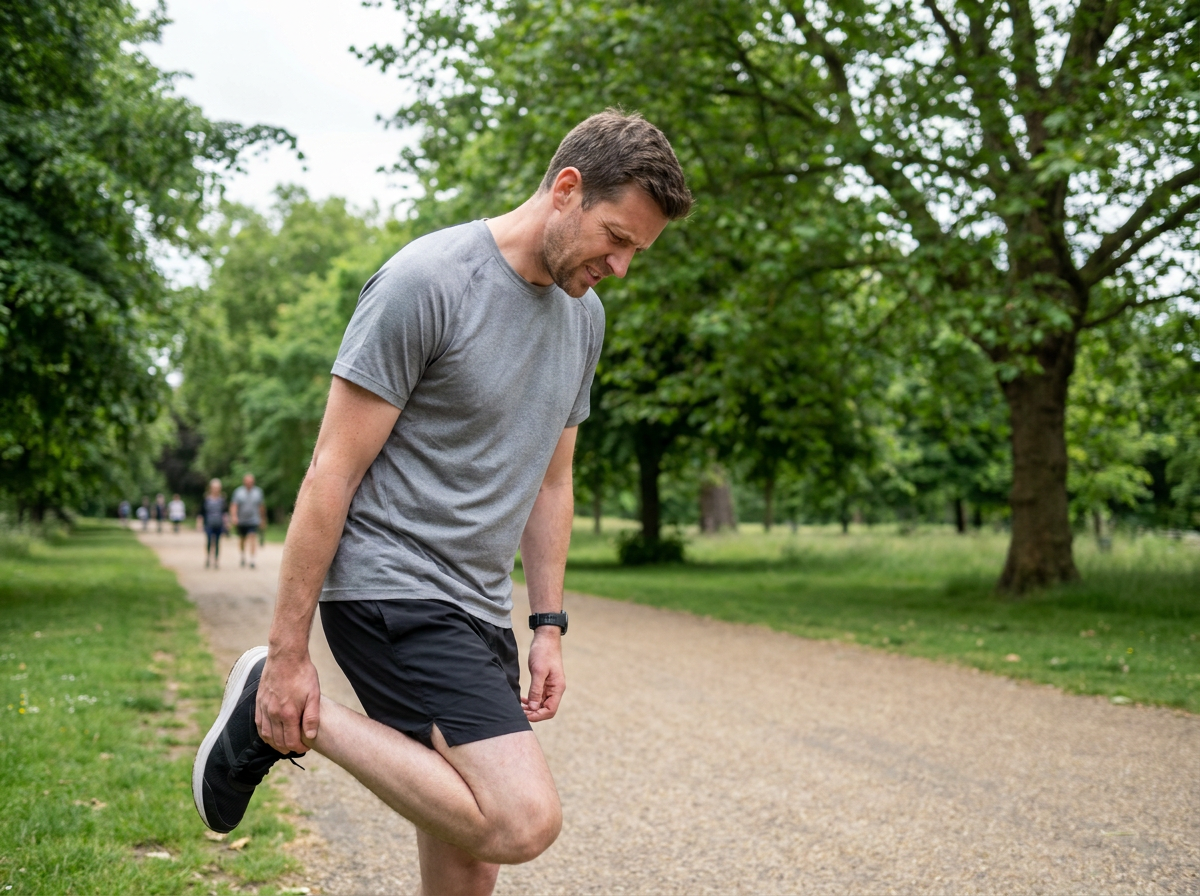
First: when Achilles/heel pain needs urgent medical advice
Most Achilles insertion pain is not an emergency. But seek urgent medical advice if you have:
a sudden “pop” in the Achilles with immediate weakness (possible rupture)
inability to push off the foot or stand on tiptoes
significant swelling/bruising after a sudden event
severe pain with fever/redness spreading (infection concern)
calf swelling with warmth/redness and breathlessness (medical screening needed)
If you're unsure, get checked.
What is insertional Achilles pain?
The Achilles tendon attaches into the heel bone (calcaneus). When pain is right at this attachment point, it's often called:
insertional Achilles tendinopathy
sometimes associated with retrocalcaneal bursitis (a bursa near the tendon)
sometimes associated with a Haglund's-type irritation (bony prominence + shoe rubbing)
Key point: insertional pain can be more sensitive to compression (e.g., shoes rubbing, deep ankle dorsiflexion) than mid-portion Achilles pain.
Common symptoms (what people notice)
tenderness right where the tendon meets the heel
stiffness on first steps in the morning
pain going uphill or upstairs
pain after longer walks/runs
discomfort in shoes with a firm heel counter
sometimes a visible “bump” or thickening at the back of the heel
pain with calf raises (especially deeper range)
Why it happens (common causes and triggers)
Insertional Achilles pain is usually a load management + tissue capacity problem.
Common triggers include:
1) A spike in running or walking volume
sudden mileage increase
returning after time off
adding long walks on holiday
charity events, hikes, lots of steps
2) Hills and speed work
Hills increase Achilles load. Speed work increases tendon demand.
3) Change in footwear
switching to flatter shoes
minimalist footwear
worn-out trainers
stiff heel counters rubbing the insertion
4) Calf strength/endurance not matching demand
If the calf is underprepared, the Achilles insertion takes more stress.
5) Reduced ankle mobility or altered mechanics
Sometimes ankle stiffness or foot mechanics contribute — not as a single “cause,” but as part of the overall load picture.
Insertional Achilles vs mid-portion Achilles (why it matters)
A lot of online rehab advice is written for mid-portion Achilles pain (a few cm above the heel). Insertional pain can behave differently.
Insertional Achilles pain is often aggravated by:
deep ankle dorsiflexion (heel dropping below a step)
compression from shoes
stretching the calf aggressively into end-range
That's why some classic “heel drop off a step” programmes need modifying early on.
What to do in the first 7 days (practical steps)
The goal is to calm irritation without deconditioning the tendon.
1) Reduce the biggest triggers (temporarily)
For 7–14 days, reduce:
hills
speed sessions
long walks/runs beyond your pain threshold
repeated stair climbing if it spikes symptoms
You don't necessarily need to stop everything — you need to stop poking the sore spot.
A useful rule:
keep pain during activity at 0–3/10
symptoms should settle back to baseline within 24 hours
2) Modify footwear (often a quick win)
Consider:
shoes with a slightly higher heel-to-toe drop temporarily
avoiding stiff heel counters that rub
a small temporary heel lift can reduce tendon compression (short-term tool, not forever)
3) Avoid aggressive stretching early on
If stretching the calf creates a sharp pinch at the heel, back off. Gentle mobility is fine — forced end-range is often not.
4) Start calf loading in a pain-smart way
Early on, many people do better with:
isometric calf holds
calf raises on flat ground (not off a step)
controlled range that doesn't pinch at the insertion
What to avoid (common mistakes)
pushing through sharp heel pain because it “warms up”
doing lots of heel drops off a step immediately (too much compression early on)
aggressive foam rolling directly on the painful insertion
switching shoes repeatedly without a plan
resting completely for weeks (tendons hate sudden unloading, then reloading)
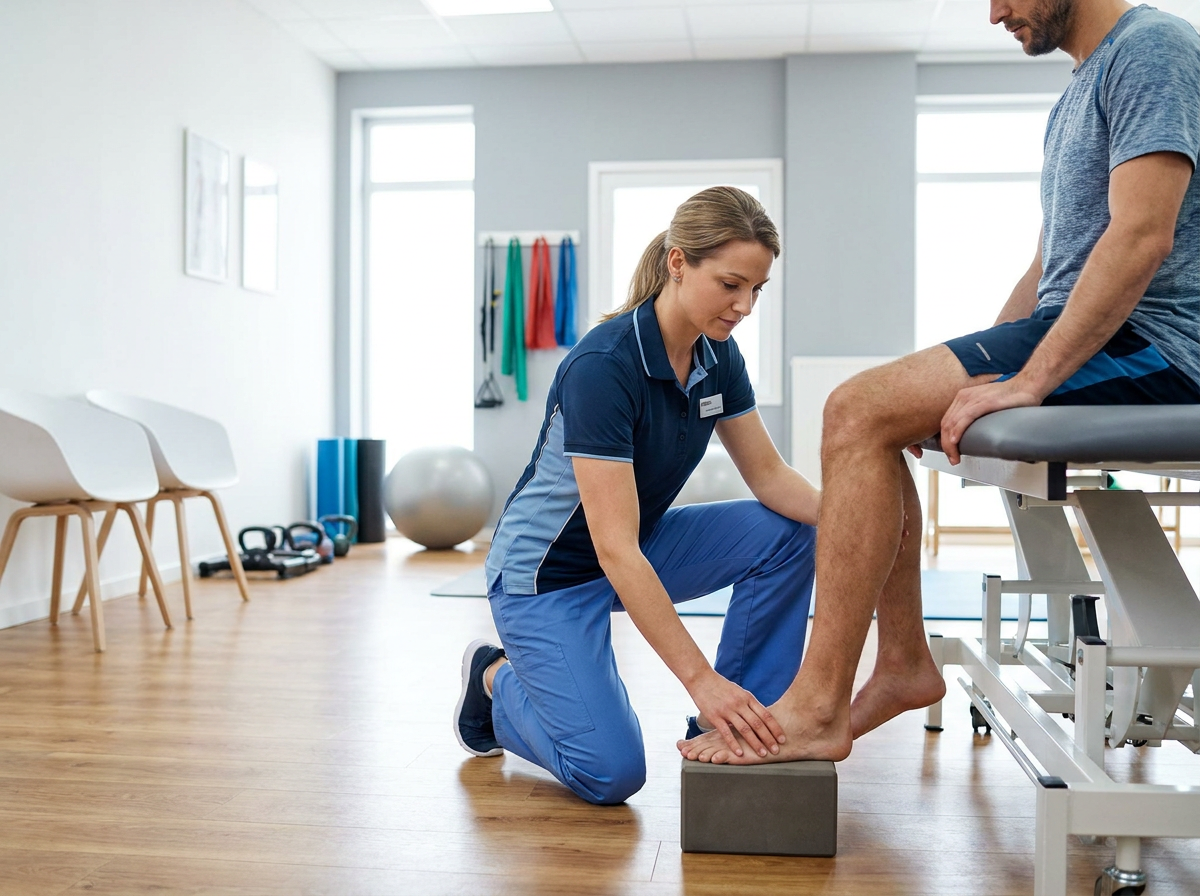
What a physio assessment should include
A proper assessment for insertional Achilles pain typically checks:
exact pain location (insertion vs mid-portion vs plantar fascia)
tendon thickness/tenderness and irritability
calf strength and endurance (single-leg calf raise capacity)
ankle mobility and foot mechanics (as contributors)
training history (what changed in the last 2–6 weeks)
footwear and daily load (work on feet, steps, stairs)
a graded rehab + return-to-run plan
Exercises that usually help (general guidance)
Your plan should be tailored, but these are common building blocks.
1) Isometric calf holds (pain-calming strength)
Often helpful early on:
hold a calf raise position (both legs or single leg depending on tolerance)
short holds, repeated
aim for “strong effort” without sharp pain
2) Calf raises on flat ground (not off a step initially)
For insertional pain, start with:
controlled calf raises on the floor
avoid dropping the heel below neutral early on
progress load gradually (add backpack/weights later)
3) Soleus-focused work (bent-knee calf)
The soleus is crucial for running and walking endurance.
4) Hip and foot strength (if needed)
Sometimes improving overall lower-limb control reduces repeated overload.
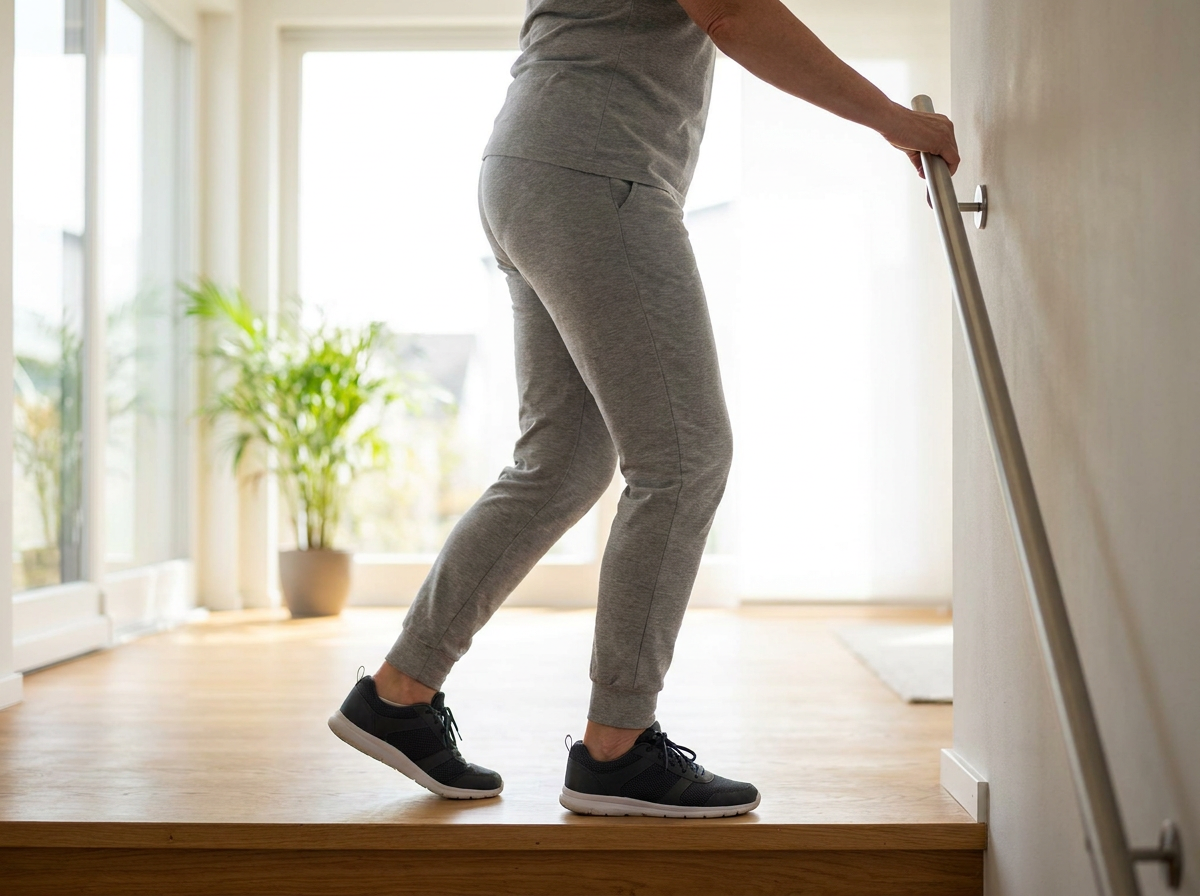
Note: For insertional pain, start this on flat ground or limit the drop range until symptoms are calmer.
Return to running / long walking (simple framework)
A sensible return usually looks like:
Symptoms are stable (no big next-day flare)
You can do calf raises with tolerable pain and good control
You reintroduce running gradually (distance first, then speed/hills)
Practical tips:
start with flatter routes
avoid hills early
keep cadence comfortable (avoid big bounding strides)
build volume slowly (one variable at a time)
If you tell me your current baseline (e.g., “I can run 10 minutes before it hurts”), I can outline a simple 2–3 week return-to-run progression.
How long does insertional Achilles pain take to settle?
Tendons improve with consistency, but not overnight.
Rough guide:
noticeable improvement: often 2–6 weeks with the right plan
stronger, more resilient tendon: often 8–12+ weeks
if it's been lingering for months, it can take longer — but it's still very treatable
What we can/can't do (honest expectations)
What we can do
confirm whether it's insertional Achilles vs plantar fascia vs mid-portion Achilles
reduce pain and morning stiffness
rebuild calf/Achilles capacity safely
guide return to running/walking without repeated flare-ups
advise on footwear and load management
What we can't do
fix it permanently with rest alone
promise it will tolerate sudden mileage spikes without consequences
Book a free assessment in Chelmsford
If you're in Chelmsford, Great Baddow, Springfield, Writtle, Galleywood, Boreham or Chelmer Village and want a clear plan for Achilles pain at the back of the heel, book a free assessment.
Revive Health Chelmsford
Call: 01245 956391 or 07723 503277
Website: https://www.revivehealthchelmsford.co.uk
FAQs: Achilles pain at the back of the heel
Is this the same as plantar fasciitis?
Not usually. Plantar fasciitis is typically under the heel/arch. Insertional Achilles pain is at the back of the heel where the tendon attaches.
Should I stretch my calf?
Gentle stretching can help some people, but aggressive end-range stretching that pinches the heel often flares insertional pain.
Do I need shockwave therapy?
Shockwave can help some tendon problems, but it's usually most effective alongside a structured loading programme. Assessment can advise if you're a good candidate.
Can I keep running?
Often yes, if pain stays low (0–3/10) and settles within 24 hours, and you avoid hills/speed early on. If it's sharp and worsening, pause running and get assessed.
Do I need a scan?
Many cases don't. If symptoms persist or aren't following a typical pattern, a clinician can advise on imaging.
Disclaimer: This article is for general information only and isn't a substitute for medical advice. If you're worried about your symptoms, please seek appropriate medical care.